

Service Southern Maine
Septic Systems
New systems and replacements, from soil test through to final inspection, including the paperwork.
People usually call about septic for one of three reasons: a system is at the end of its life, a sale is pending, or a lot needs one before anything can be built. It is a process with a defined sequence, and it runs the same way every time.
How a septic job runs
- Soil test and site evaluation. We dig the test pits. A licensed site evaluator then reads the soil profile and determines what the ground will accept and where. That decides the system type and, to a large extent, the cost.
- Design. The evaluator produces the system design and the application the town requires.
- Town approval. The local Code Enforcement Officer reviews the application and issues the permit.
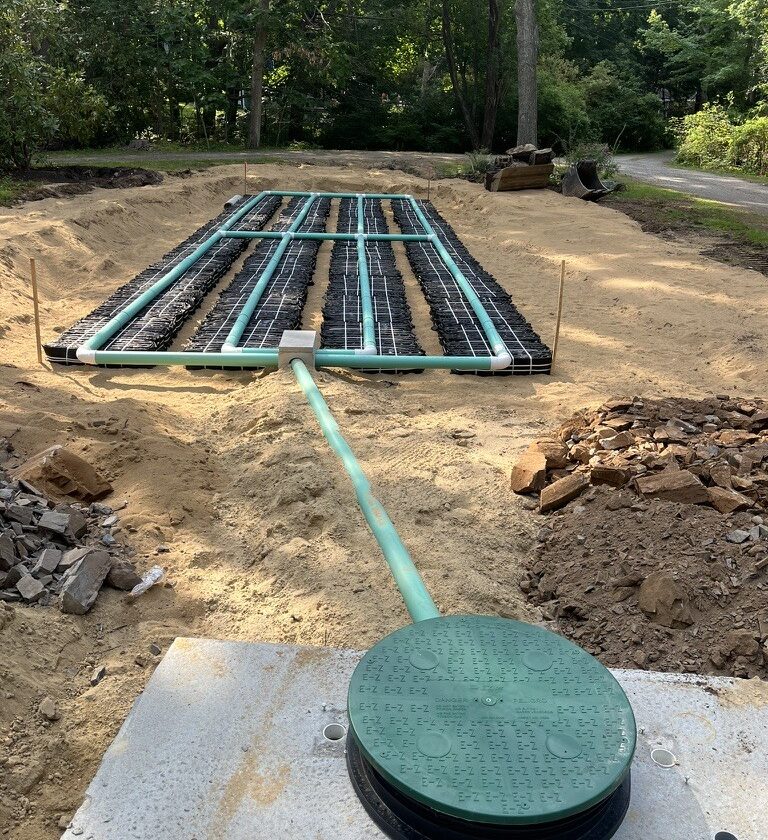
- Installation. Tank, distribution, and leach field, built to the approved design.
- Inspection. The system is inspected before it is covered.
What drives the price
Soil is the whole story. Ground that percolates well takes a conventional system. Ground that does not, or a high water table, or ledge too close to the surface, pushes you toward a raised or engineered system that costs considerably more. The test pits tell you which you have, and that is the first thing we do.
We can take the whole sequence, from digging the test pits through to final inspection, or pick it up wherever you already are. If you have a design and a permit in hand, we can work from those.
If you are buying a property and the septic is an unknown, get the test done before you close.